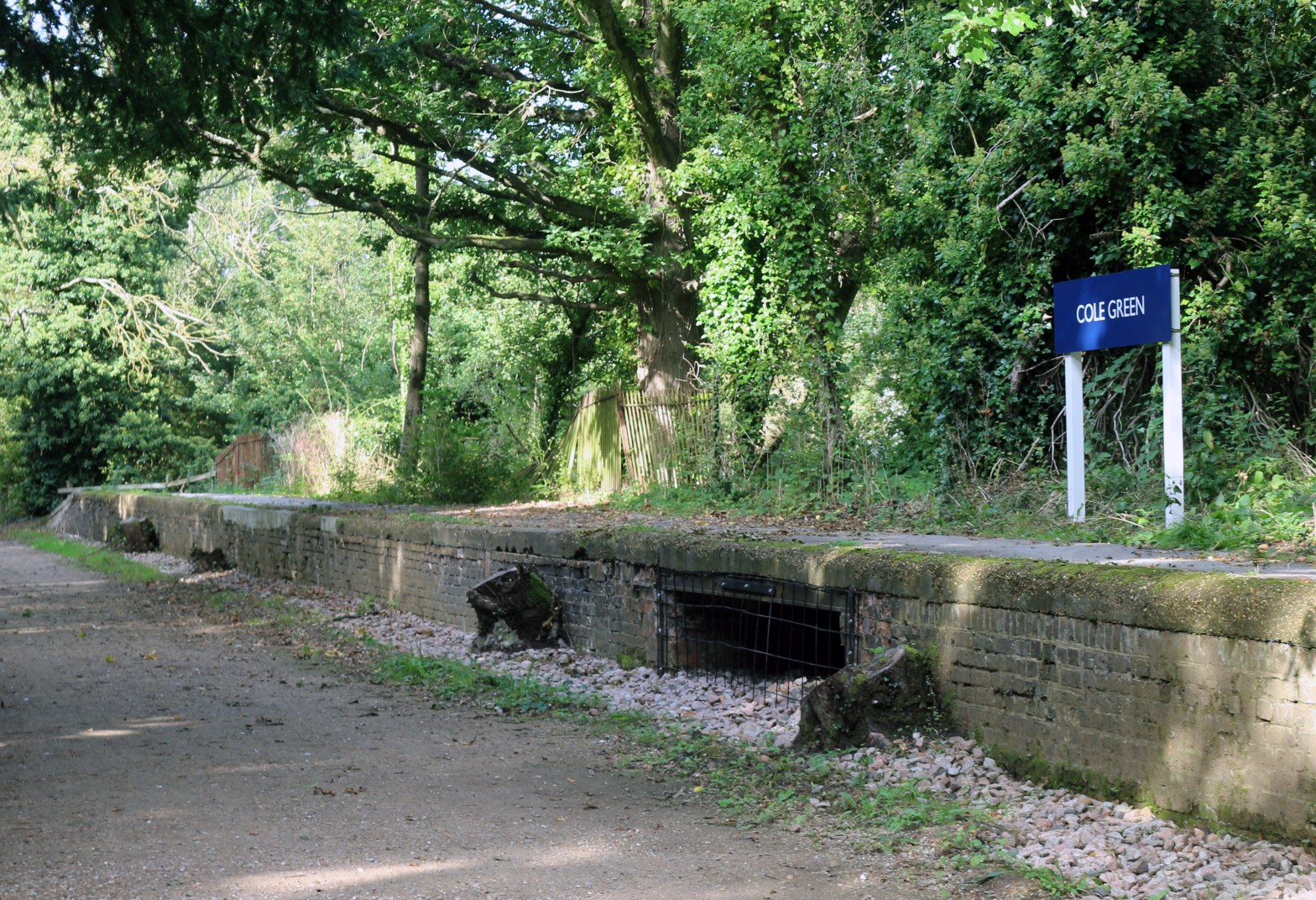
After time out to let a hamstring know its proper place (that is, being unobtrusive) in the grand scheme of things, I returned to my circumcardinal route for the next easy section: Hatfield to St Albans along the Alban Way. The route follows the old railway line from Hatfield (just north of the station) to St Albans, at the Abbey station, which today only serves trains to Watford. I broke off just before the end to descend to the River Ver and follow the Ver-Colne Valley Walk into St Albans (next section follows that route, and the Hertfordshire Way, to Redbourn).
The Alban Way near Smallford, about half-way between Hatefield and St Albans.
The Alban Way is straightforward, and is without stiles, and the one flight of steps, within Hatfield, has a ramp alternative. In no way demanding, but almost exclusively a green corridor with a bus route easily accessible just to the north.
My radial route to Gravesend needs a temporary (I hope) diversion: a large area of Rosherville has been cordoned off, and there is no access between Crete Hall Road and the roundabout at Thames Way and West Street. The alternative route (which requires a 30m climb to London Road and a similar descent to Thames Way) is given in the text of Section 8: Southfleet to Gravesend.
This means that there is no longer a route on the bank of the Thames, and no view of the Tilbury Container Terminal across the river, nor of the sad remnants of Art Deco buildings.
The housing will wipe out the site of the Rosherville Pleasure Gardens (1837-1901) as well as the Crete Hall estate.
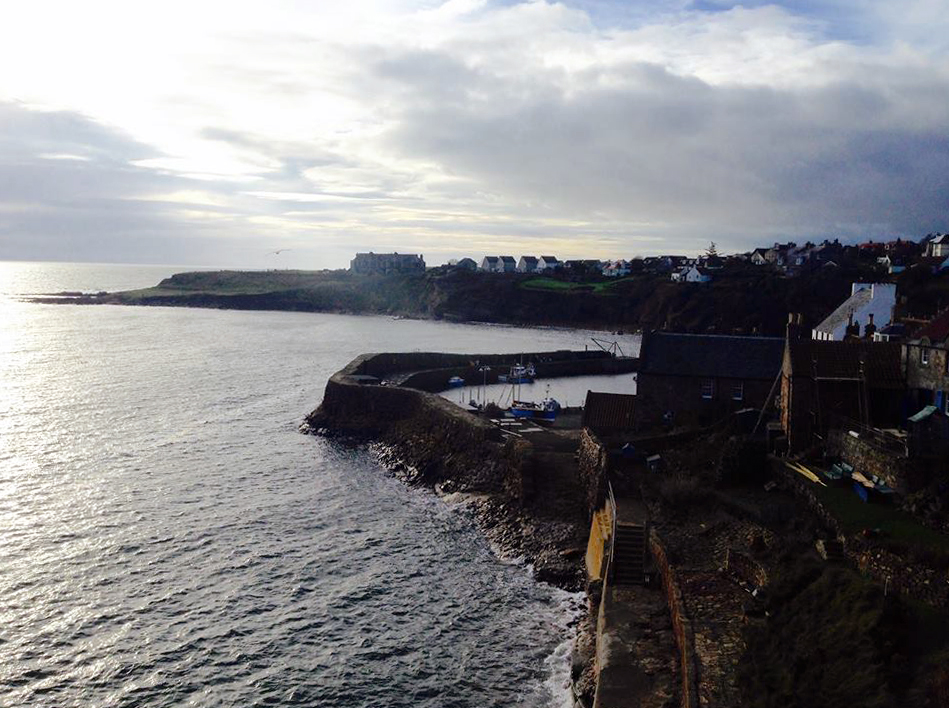
A twitch upon the thread this week — I discovered Hamish Brown’s Exploring the Fife Coastal Pathin its new 2021 edition. Parts of that route have been in my DNA for sixty years, and I have been reading the author for forty years. Immediately, I was drawn back to the East Neuk, and to the northern hills where the Ochils peter out to the Tay. It is all given in Hamish’s polymathic chatty style, with minimal maps, encouraging you to use the OS mapping.
The route also chimes in with the idea of walks achieved with the help of public transport. Armchair walking for now, but how I’d like to get back on the route!
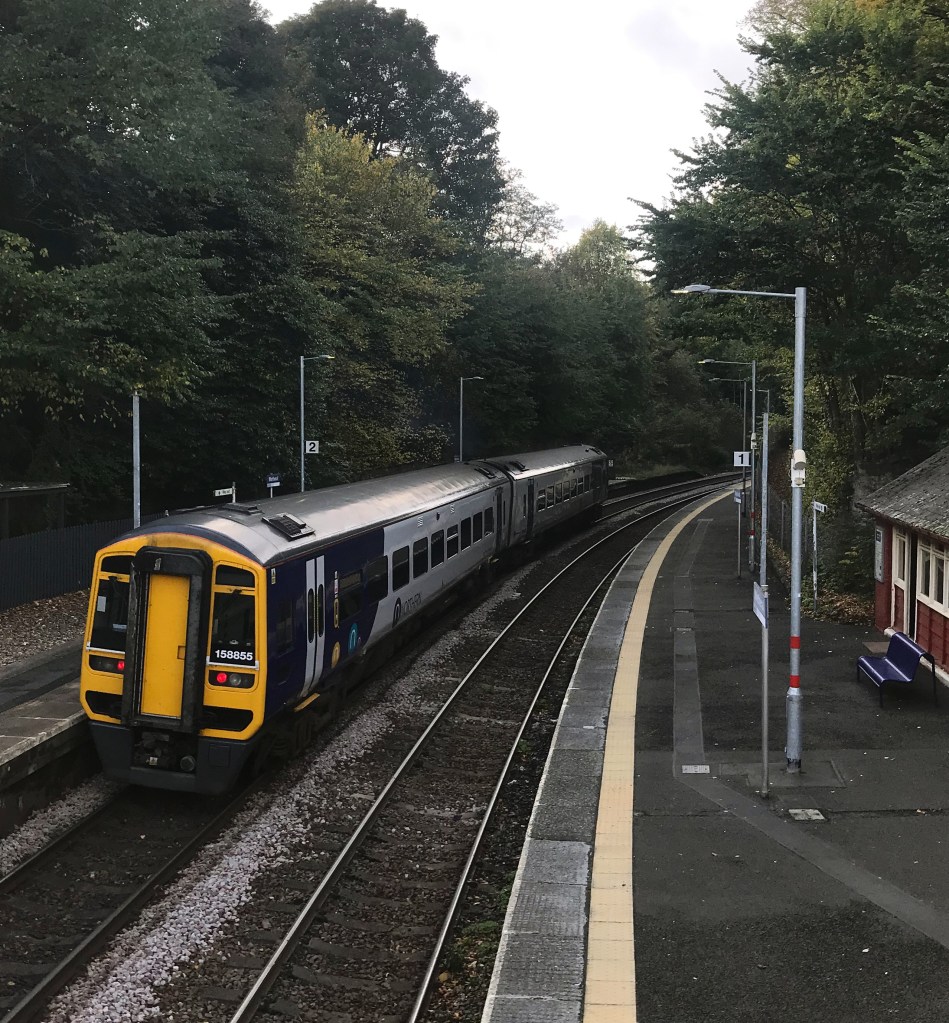
A train departs from Wetheral station towards Carlisle
A week ago, I spent a fine weekend with Mark Richards, exploring the idea of promoting (and at times devising) walking routes with a public-transport focus. Our walking connected Carlisle, Wetheral and Brampton stations on the Tyne Valley Line, as well as the spur into the centre of Brampton.
The Tyne Valley Line is one of the more walker-friendly lines to walk: though the sections to and from Brampton might be a little challenging for some (there is a limited bus option to break these sections, and taxi options are always available), the entire line between Carlisle and Newcastle may be walked using only the trains. The route gives a local alternative to the Hadrian’s Wall Path, the use of which is discouraged in the GMT months to avoid damage to the monument and its environs.
Of course, public transport accessibility has always been a focus on my walks, from the Ring around the Underground to the Nord-Ostsee Wanderweg: we just need to keep pushing the concept, and bringing operators on board. Seventy years ago, British Railways offered Ramblers’ Returns for what the airline industry now terms “open-jaw” business. The BR formula was simple: add the return fares to each end and divide by two. Time, perhaps, to revive the idea, and to offer innovations such as a carnet system (this would work on the Tyne Valley Line) or an Offa’s Dyke return, valid for one journey to any of the stations serving the path, and one returning from any of those stations. This latter idea, which could be used for other routes (the North Downs Way and the John Muir Way come immediately to mind), gives the security of being able to break off at pre-arranged points or in an emergency without losing “the return half”.
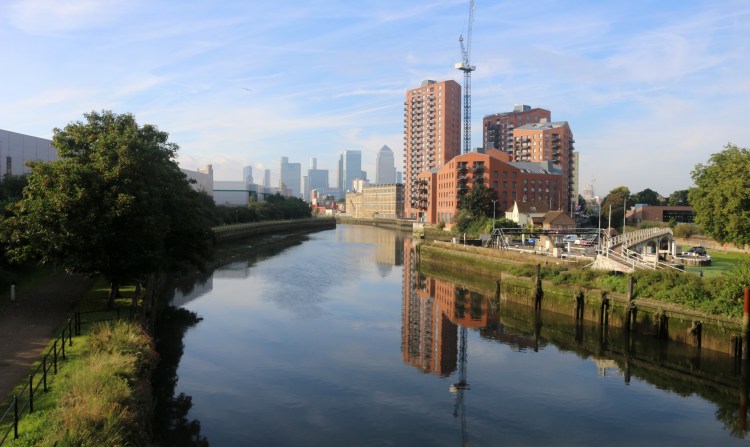
I have now completed the Lea Valley Walk, from the Thames to the source at Leagrave. Three full mornings and two half-mornings for 93km, of which 44km was an unbroken stretch on towpath, 14km was on railway trackbeds (much of which was tarmac), and the bulk of the remainder on urban roads and paths.
For these reasons, and paying attention to the complaints from my heels, it will not feature in my top ten routes for through-walking. It is perhaps more suited to accumulating coverage, jigsaw fashion, as part of day circuits.
Bow Locks
There are many points of interest, from the view of Bow Locks to the peek across the valley to Luton Hoo (landscaped by Capability Brown). But I longed for a bit more variety between Bow and Hertford, other than the “water on the left” and “water on the right” sort of variety.
Morecambe and Brown
The driving rain I met on the last half-morning was not conducive to thinking well of urban Luton, though the rain eased off just before I reached the source.



 Lwalks.London